Last updated November 23, 2026
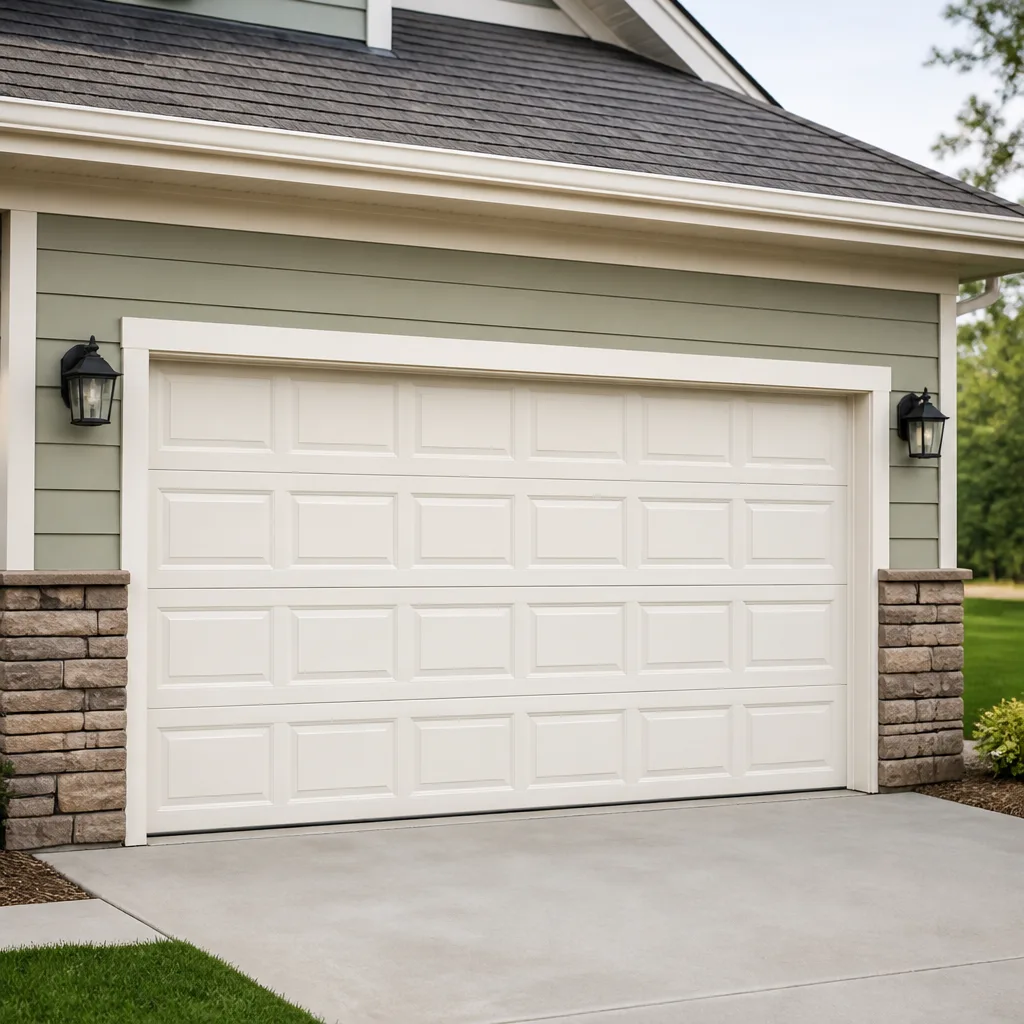 Raised-panel steel
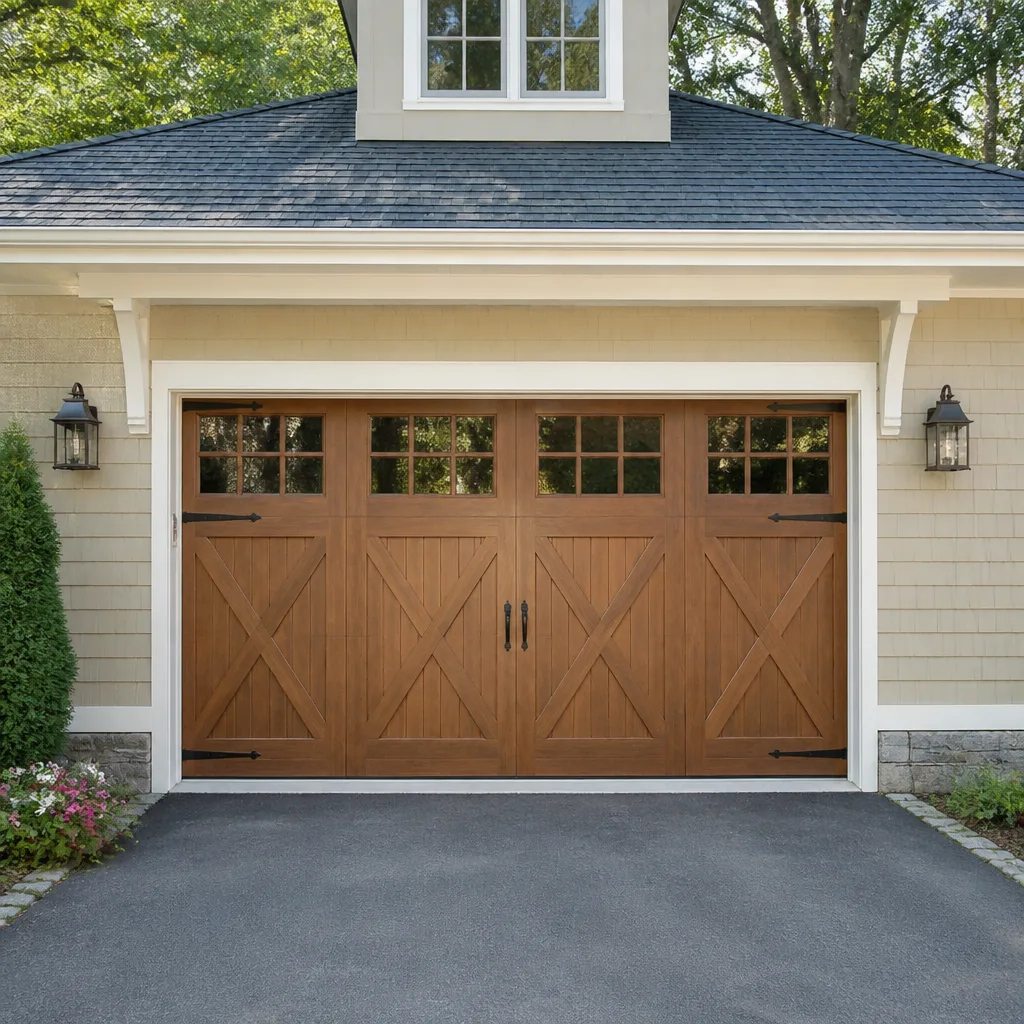 Carriage house
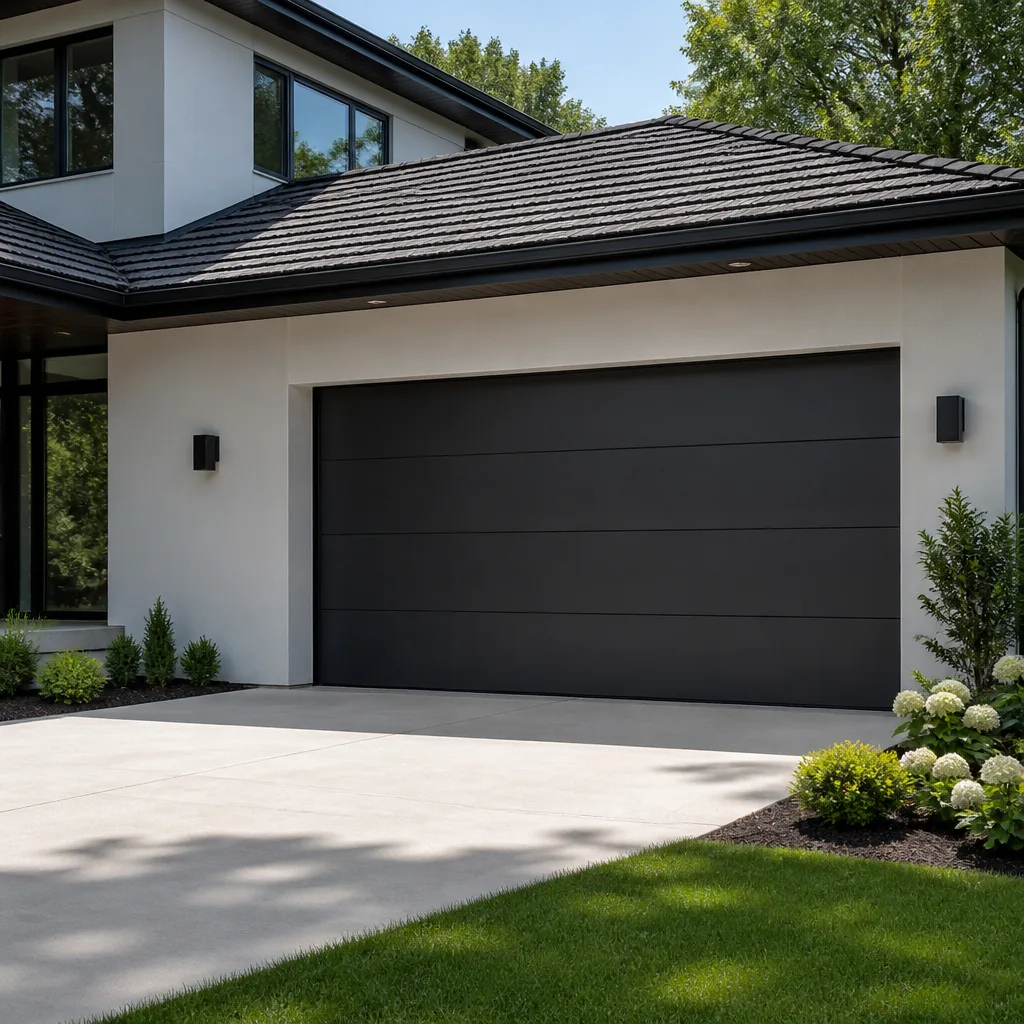 Modern flush
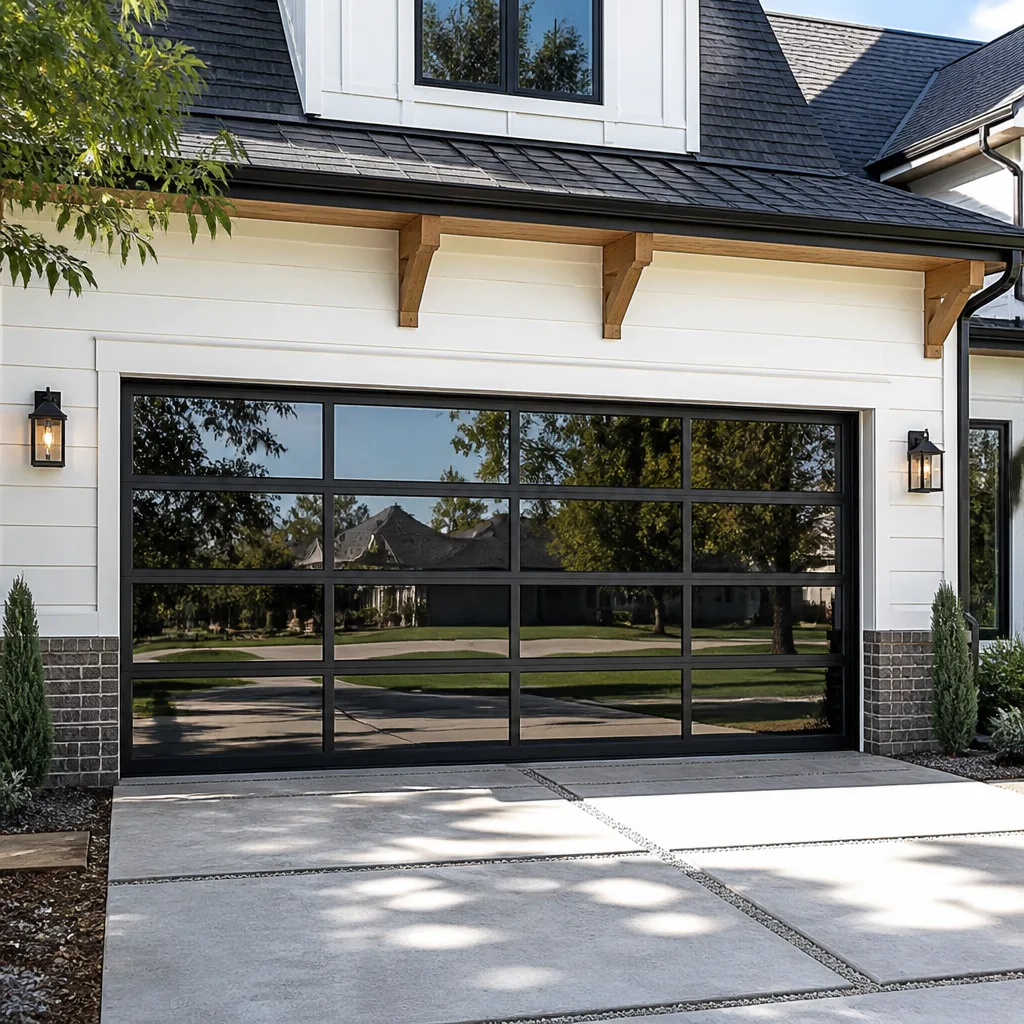 Full-view glass
 LiftMaster openers
 Chamberlain openers
Full 25-point door and opener safety check with every visit - springs, cables, rollers, tracks, and your LiftMaster or Chamberlain opener included
You get a price before we start. It does not change when the pro arrives.
Get your free estimateGarage Door Repair Maintenance Checklist for Vineland Homeowners
Most garage door checklists are written like a doctor telling you to “feel your pulse” without saying what a good pulse feels like. “Inspect the springs.” “Check the tracks.” Inspect them for what? A homeowner who doesn’t know what a failing spring looks like walks away from a checklist no smarter than before. So this guide is built differently: every item has a pass/fail standard. You’ll know what you’re looking for, what’s safe to handle yourself, and what’s genuinely dangerous. In our experience, a homeowner who knows what a bad result looks like catches problems months before they strand the car. Here’s the checklist we’d hand any Vineland homeowner.
Quick Answer
A useful garage door maintenance checklist gives you a pass/fail standard for each part, not just a name to look at. In Vineland’s humid summers and freeze-thaw winters, check balance and safety reverse monthly, inspect springs and cables visually every month, lubricate moving parts twice a year, and book a professional spring and cable inspection once a year. Anything involving spring tension or cable replacement is professional work, full stop.
Styles & brands we work with
- Raised-panel steel
- Carriage house
- Modern flush
- Full-view glass
- LiftMaster openers
- Chamberlain openers
Table of Contents
- The 2-Minute Monthly Tests Every Vineland Homeowner Should Run
- Spring Inspection: What a Failing Spring Actually Looks Like
- Cables, Tracks, and Rollers: Reading the Signs
- A Month-by-Month Schedule for Vineland’s Climate
- Opener Checks: LiftMaster, Chamberlain, and Genie Systems
- What’s Safe to Do Yourself vs. What Isn’t
- What to Document After Every Inspection
- Common Mistakes to Avoid
The 2-Minute Monthly Tests Every Vineland Homeowner Should Run
Two tests catch most developing problems before they turn into a dead door. They take two minutes, need no tools, and you can run them on a Wednesday morning before work. Do both on the same day each month so it becomes a habit.
The balance test
- Close the door fully, then pull the red emergency release cord to disconnect the opener.
- Lift the door by hand to about halfway open and let go.
- Watch what it does.
Pass: the door stays roughly where you let go, maybe drifting an inch or two. That means the springs are counterbalancing the door’s weight correctly.
Fail: the door slams down fast, or shoots up on its own. Either one points to spring tension that’s out of spec, and spring tension is not something to adjust yourself.
Reconnect the opener by pulling the cord toward the door and running the opener to re-engage the carriage.
The force-resistance test
Close the door and press the wall button to open it. As it rises, hold your hand flat under the bottom edge, palm up, without gripping. Pass: the door reverses or stops immediately on contact. Fail: it keeps pushing against your hand even for a second. A door that won’t reverse is a serious safety problem, especially in a home with kids or pets, and it should be looked at before the door is used again.
We work on LiftMaster and Chamberlain openers most often in Vineland, and both have a force-adjustment screw on the back or side of the motor housing. Modern openers made after 1993 also have photoelectric safety eyes near the floor; a door that closes on an object without reversing has a sensor or force problem. Either one is a call to a technician, not a tweak with a screwdriver.
Spring Inspection: What a Failing Spring Actually Looks Like
Springs are under extreme tension. This is not a DIY repair, and no checklist should suggest otherwise. But you can and should look at them monthly, because a spring rarely breaks without warning. It telegraphs the failure first. Here’s what to look for, from a safe distance, with the door closed and the opener off.
Torsion springs (the coiled ones on the shaft above the door)
- Pass: the coils are evenly spaced and tight, with visible gaps between windings that look uniform across the whole spring. A healthy torsion spring has a faint painted line or a set-screw mark that’s intact.
- Fail: a visible gap in the middle of the spring where a coil has separated. That’s a cracked spring, and it can look like a thin silver line rather than a full break. The door may still open on the remaining spring, which is more dangerous than a total failure because it invites continued use.
- Fail: stretched coils, meaning the gaps between windings are visibly uneven from one end to the other. An overstretched spring is one that’s been adjusted beyond its rated cycle life and is likely to snap.
- Fail: rust scale or heavy flaking. In Vineland’s humid summers, springs on a south-facing or uninsulated garage can rust faster than the same spring in a drier climate, and rust is where fatigue cracks start.
Extension springs (the long ones running along the horizontal tracks)
- Pass: straight spring body, safety cable running through the center of the spring, no kinks.
- Fail: a visible sag or a hook end that’s pulling out of the bracket. Extension springs can fly when they break; the safety cable is what stops them, so make sure it’s there.
If you find a cracked spring, stop using the door. Call garage door spring repair before a second spring breaks or the opener burns itself out trying to lift a door with no counterbalance. We see both happen, and the repair gets more expensive the longer it waits.
How a spring gets replaced
Spring replacement isn’t a “parts swap.” A technician measures the door’s weight, matches the spring wire gauge and inside diameter to the door, winds the spring to the correct number of turns, and then re-runs the balance and force tests to confirm. The written estimate is agreed before any work starts, so the price you hear on the phone is the price on the invoice.
Cables, Tracks, and Rollers: Reading the Signs
Cables and springs work as a pair. A worn cable can be just as dangerous as a broken spring, and on a garage door in Vineland, the cables are often the first thing to show wear because of the seasonal humidity swings.
Lift cables
These are the braided steel cables running from the bottom brackets up to the spring system. Look at them with the door closed.
- Pass: cable lies flat in the drum, no fraying visible, no rust spots, and the cable sits cleanly inside the bottom bracket.
- Fail: any visible broken strand (a “birdcage” of wire sticking out), rust pitting, a kink, or the cable sitting off the drum. A single broken strand means the cable is compromised and should be replaced as a pair.
Never touch a cable under tension. A snapped cable whips and cuts. This is professional territory.
Tracks
- Pass: vertical tracks plumb, horizontal tracks level and parallel, no dents, no visible gap between the track and the door’s rollers.
- Fail: a bent track section, or a door that visibly shifts to one side as it opens. Bending a track with a hammer or a pry bar usually makes it worse and can damage the door itself.
Rollers and hinges
- Pass: rollers spin freely with the door in the open position and slide in the track without wobble. Hinges move with no visible play or rust.
- Fail: nylon rollers with flat spots or chips, steel rollers that squeal or seize, or hinges with bent leaves or rusted pins.
Weather seal
The bottom rubber seal and side weather stripping are the first line of defense against Vineland’s humid summer air and the driving rain that comes with fall storms. Pass: the seal presses against the floor along its full length. Fail: light visible under the door when it’s closed, or a seal that’s cracked, torn, or flaking. A failed bottom seal lets in water, insects, and cold air. It’s also one of the few replacements a homeowner can genuinely do themselves with nothing more than a pair of pliers and the right replacement strip.
A Month-by-Month Schedule for Vineland’s Climate
“Twice a year” is advice written for a climate that doesn’t have four distinct seasons. Vineland does: muggy summers, wet springs, freezing winters. The door system reacts differently in each, so the right schedule maps to the calendar, not an arbitrary interval.
- January: Post-winter-holiday check. Listen for grinding or binding on open and close. Cold stiffens nylon rollers and lubricant, and the door may sound worse than it is. If it binds, stop using it until a technician checks it.
- February: Balance test after the coldest stretch. Cold-weather failures most often show up here.
- March: Spring prep. Check the bottom seal for cracks from the freeze-thaw cycle and clean out debris in the tracks (grit and dead leaves get into the track and grind the rollers).
- April: Spring inspection with the door closed and the opener off. Look for rust on the springs and check the cables for fraying. Wet weather brings humidity back.
- May: Lubrication. White lithium grease on the spring, silicone spray on the hinges and rollers, and a few drops of light oil in the track. Do not use WD-40 on springs; it attracts dust.
- June: Photoelectric eye test. Wipe the safety-eye lenses clean (dust builds up fast in summer) and confirm the door reverses when you break the beam with your leg.
- July: Garage door opener force test. Hot, humid air can affect the opener’s travel limits; confirm the door reverses on contact with your palm.
- August: Hinge and roller inspection. Humidity swells wood doors; on a steel or composite door, look for rust at bolt points.
- September: Cables and spring inspection before the first heating season. Any rust or fraying should be looked at now, not in December.
- October: Weather seal full check. Confirm the seal under the door and along the sides. This is the month to replace a failing bottom seal; it’s easier than in the cold.
- November: Pre-winter balance test. If the door hangs up or slams down, spring tension is off and needs a trained tech.
- December: Lubricate again. Cold weather makes every moving part work harder, and lubrication is the cheapest defense against a mid-winter failure.
Opener Checks: LiftMaster, Chamberlain, and Genie Systems
The opener is often blamed for a door problem it didn’t cause. Before you call about a “dead opener,” run these checks. They’ll tell you whether the problem is the motor or the door itself.
Is the opener the problem?
- Press the wall button. If the motor hums but the door doesn’t move, the opener is fine and the door is jammed, usually a spring, a cable, or an off-track roller.
- Press the remote. If the wall button works but the remote doesn’t, it’s a remote or receiver issue, not the motor. Try a fresh battery first.
- Check the photoelectric eyes. If the LED on either eye is off or flashing, the safety reverse system is triggered or misaligned. Realign the eyes to face each other, clear any obstruction (a leaf or a spider web will do it), and try again.
What to check on the opener itself
- Lift chain or belt tension: a slack chain will slap against the rail and eventually break. There should be no more than about half an inch of sag in the middle. A belt drive should feel snug and quiet.
- Rail and carriage: look for wear or cracks on the trolley carriage. A cracked carriage is a common cause of a door that runs but disconnects from the opener.
- Travel limits: the opener should stop with the door fully closed and fully open, not short or past either. If the door travels past its open limit and bangs the header, the up-limit screw needs adjusting.
Modern LiftMaster and Chamberlain openers with MyQ onboard have a wall-mounted or app-based self-diagnostic, which will report a “door travel” or “safety sensor” error directly. Check that before assuming the motor is dead. For Genie openers, look at the LED diagnostic lights on the back panel: the pattern tells you what the opener thinks is wrong.
If the opener has power, the chain moves, and the door doesn’t, the problem is in the door. That’s a call to a technician. Book garage door opener repair and let us diagnose whether the fix is the opener, the door, or both. Often it’s not the opener at all.
What’s Safe to Do Yourself vs. What Isn’t
We’re straightforward about this: some garage door maintenance is a genuine homeowner task, and some of it can kill you. Here’s the split. Every item with real injury risk is not negotiable.
Safe for a homeowner (with care)
- Visual inspection of springs and cables from a safe distance, door closed, opener off.
- Lubricating moving parts: spring (white lithium grease), hinges and rollers (silicone spray), track (a few drops of light oil).
- Cleaning and testing the photoelectric eyes, and clearing the lenses.
- Checking and replacing the bottom weather seal.
- Testing the manual release and the safety reverse.
- Tightening a loose mounting bolt on the opener bracket, as long as the bracket itself looks sound.
- Clearing debris from the tracks (a broom or vacuum, not fingers behind a moving door).
Not safe for a homeowner (professional only)
- Adjusting, winding, or replacing springs. A torsion spring under tension can seriously injure or kill. This is the number one reason we recommend a professional for garage door repair.
- Replacing or tensioning cables. Cables snap with enough force to break bones.
- Bending or realigning tracks. A bent track that lets go under a moving door can crush fingers and damage the door.
- Adjusting opener force or travel limits on a door that isn’t in balance. It will hide the problem, not fix it.
- Replacing a spring or unbolting the door from its brackets. The door is held by the spring tension system. Remove the wrong bolt and the door drops.
If any part of you is unsure, don’t. The garage door is the heaviest moving object in your home, and most of it is under invisible tension. This is the standard a garage door specialist works to, and we don’t cut corners on it.
What to Document After Every Inspection
A maintenance log is what separates a real checkup from a ritual. It takes two minutes and pays you back three ways: it catches slow failures, it helps if you need to pursue a door or opener warranty claim, and it gives the technician a head start on the visit.
What to write down each time
- Date and mileage-free baseline: the date, the door model, the opener brand (LiftMaster, Chamberlain, Genie, Clopay, Amarr, Wayne Dalton, Craftsman, and Raynor are all on our service list), and the approximate age of the springs and opener.
- Balance test result: pass or fail, and any drift noted.
- Force test result: pass or fail, and any slow-down noticed.
- Visual findings: any rust spots, sag, gaps, wear, or noise. Photograph the springs and track with your phone; the photos become a comparison for next month.
- What you did: lubricant type and where it went, any cleaning, any parts replaced.
- What you plan to watch: e.g. “right side vertical track has a small dent at the bottom – watch for roller wobble.”
Warranty claims for garage door parts often hinge on evidence of regular maintenance and no signs of neglect or impact. An informal log, kept in a note on your phone or a notebook near the wall button, is enough. When we come out, having that log changes the conversation: we start with what you’ve already spotted rather than from scratch. Vineland Garage Door Repair Pros connects you with local professionals who work on the door system every day and will ask what you’ve logged before touching anything. Many Vineland homeowners find the log actually saves money over time, because small tracking or seal problems get caught early.
Common Mistakes to Avoid
- Adjusting a torsion spring yourself. The most common and most dangerous mistake on the list. A wound torsion spring is under hundreds of pounds of tension; call a technician and let them handle the winding bars and the balance test.
- Using WD-40 on the springs and calling it lubrication. WD-40 is a solvent, not a long-term lubricant. It strips existing grease and attracts dust. Use white lithium grease on springs and silicone spray on rollers and hinges.
- Bending a track back with a hammer. It usually makes the track worse and can crack the door panel where the roller meets the track. If a track is bent, don’t bend it back yourself.
- Ignoring a slow-closing or slamming door. A door that slams down or shoots up on close means a spring or balance problem. Vineland’s freeze-thaw swings make the symptom worse in winter, so don’t write it off as “the door is cold.”
- Skipping the annual professional inspection because nothing is visibly broken. Most of what we find in Vineland homes is invisible from the floor: micro-fractures inside a torsion spring, a single broken cable strand, worn carriage bearings. Those are the failures that strand a car.
- Assuming the opener is broken when the door is. A humming opener that won’t lift the door is usually a door problem. Replacing the opener doesn’t fix that, and you’ll be out the cost of a motor you didn’t need.
- Not testing the safety reverse regularly. It’s the one test that protects a child or pet from a closing door, and it’s free to run every month. A door that won’t reverse on contact should be taken out of service until it’s repaired.
See the difference
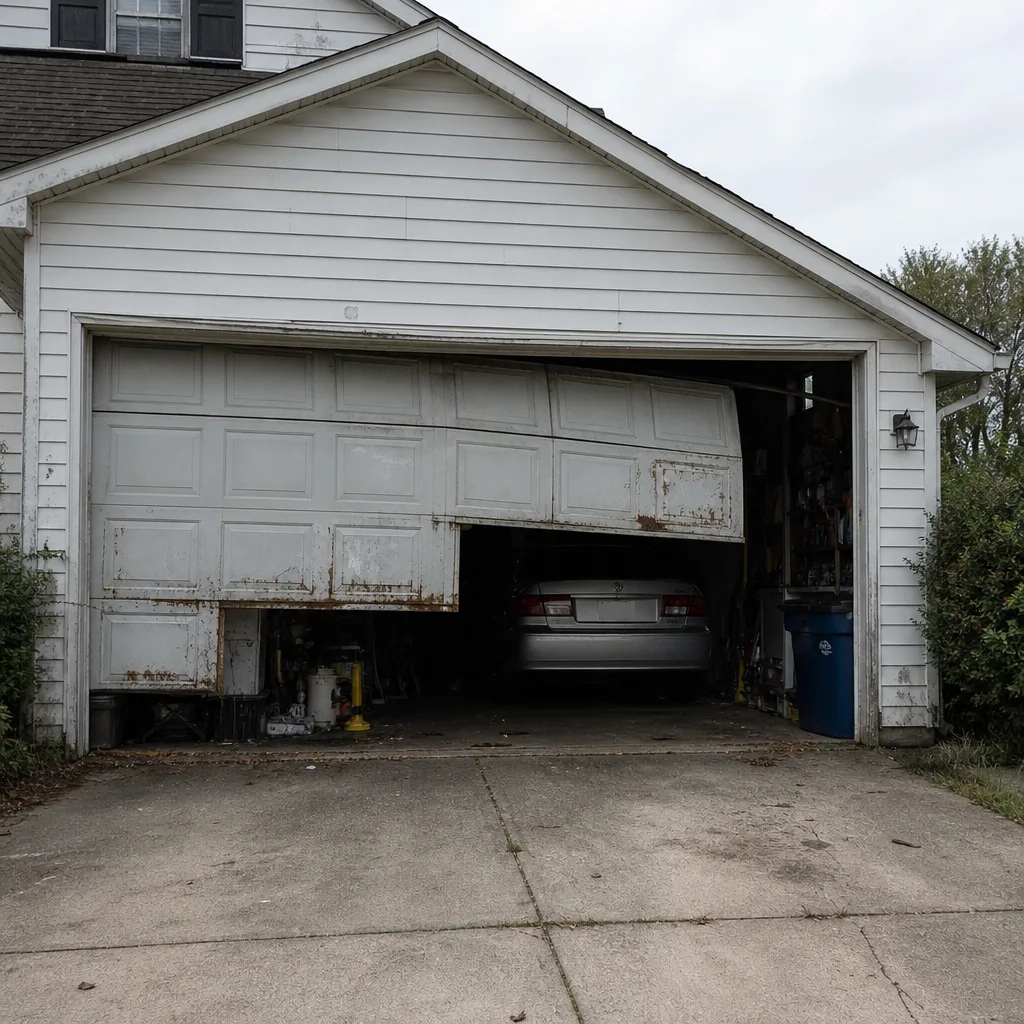 Before
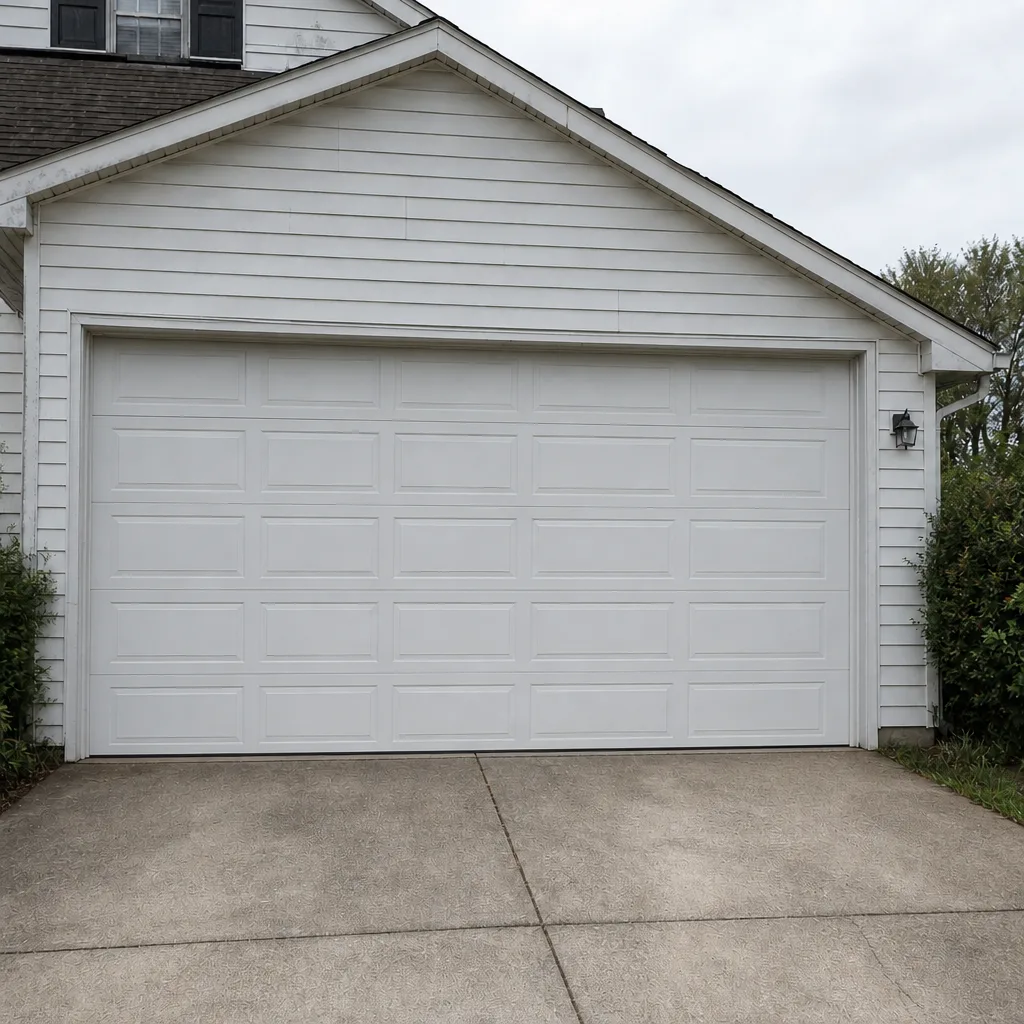 After
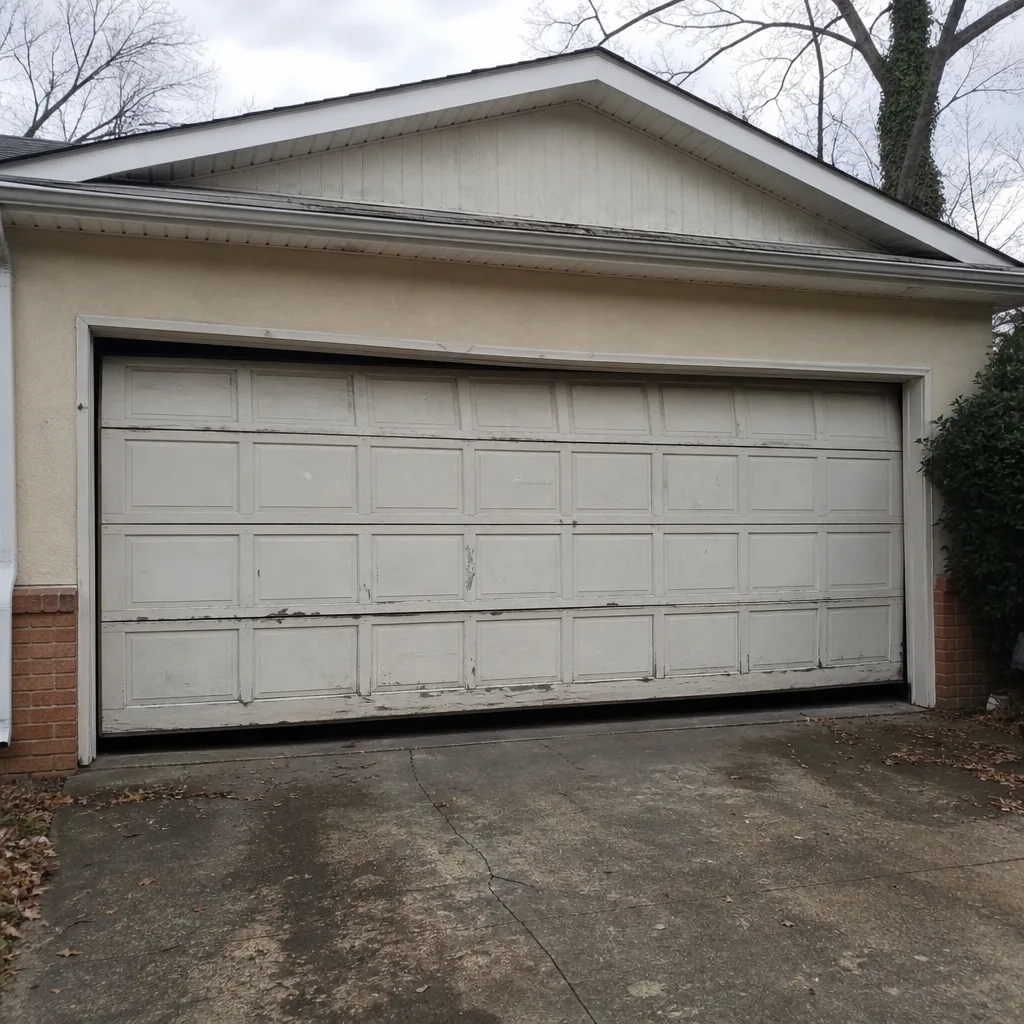 Before
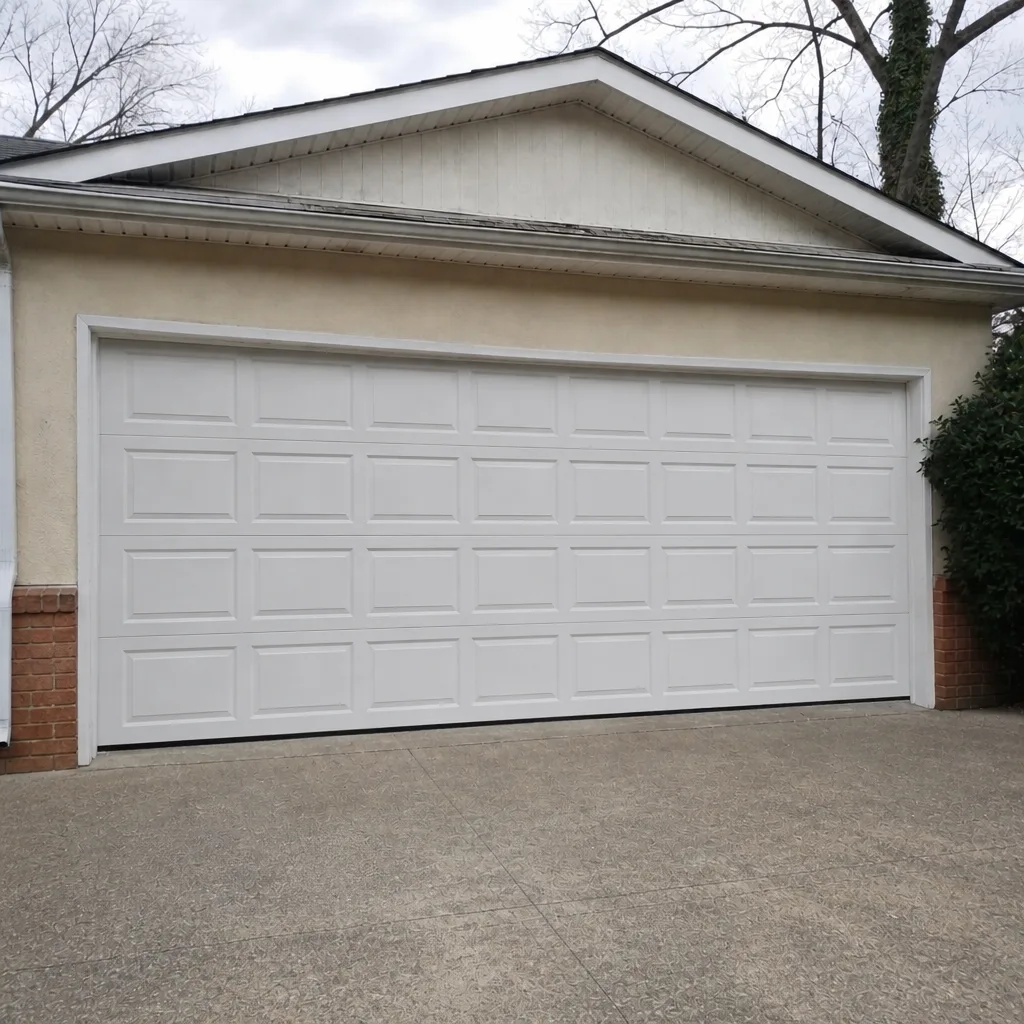 After
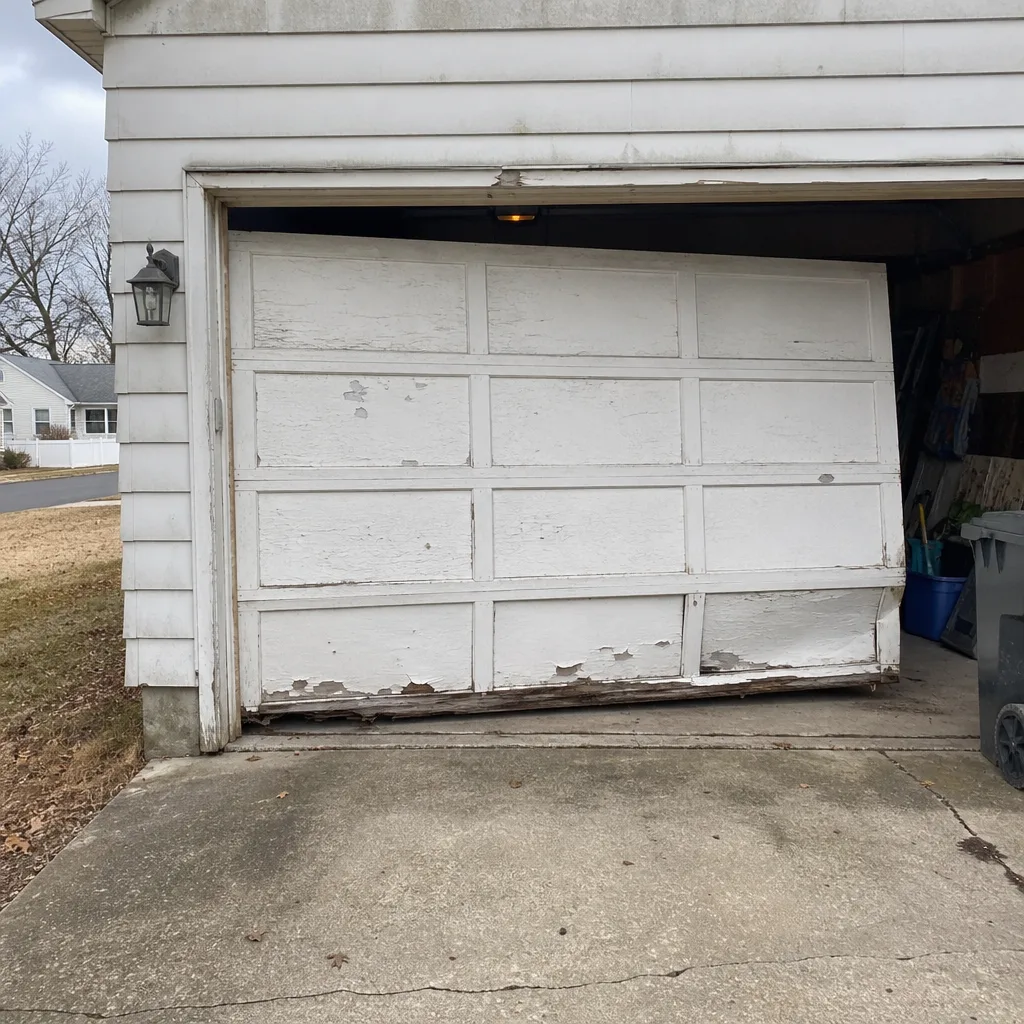 Before
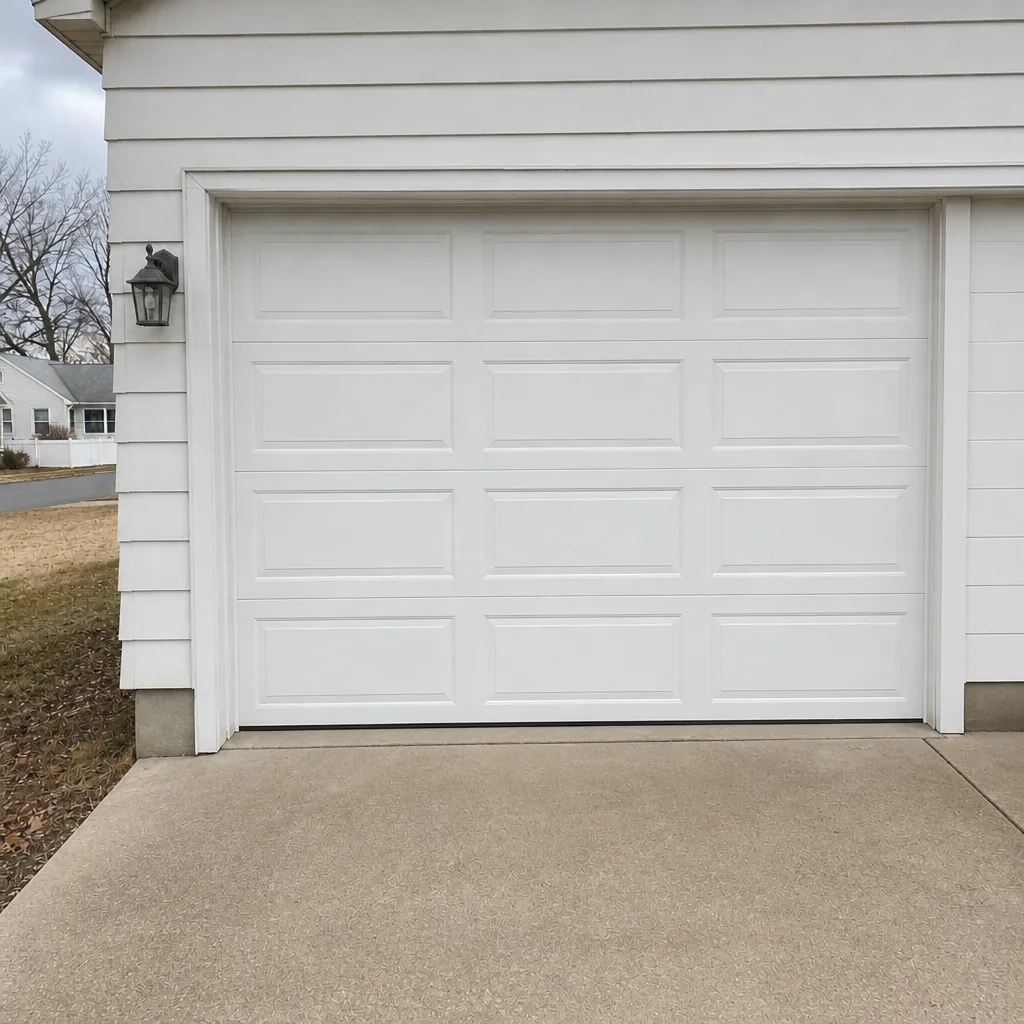 After
When to Call a Professional
Call us when the door won’t move, the balance test fails, you can see a gap in a spring or a fray in a cable, or the door reverses on its own mid-travel. Call before you run the opener on a door that’s visibly hanging on one side, because forcing it makes the repair worse. Book a professional inspection when the door gets noticeably noisier over a few weeks, when the bottom seal lets light through, or once a year as part of routine upkeep. A trained technician can also confirm whether your system is in spec for its brand and model. Vineland Garage Door Repair Pros offers free estimates in Vineland, and we can work with your insurer where applicable. Call (866) 937-7821.
Frequently Asked Questions
Run the two-minute balance and force tests once a month, and book one professional inspection a year. The monthly tests are free and catch most developing problems. The annual inspection catches what’s invisible from the floor: micro-cracks in springs, cable fraying, worn carriage bearings. Vineland’s humid summers and freezing winters make spring inspections especially worth doing twice in the spring and fall. Call (866) 937-7821 for an exact quote on an inspection – estimates are free.
Typical spring repair runs from about $180 to $340 for one spring, and a matched pair is usually replaced together, so expect roughly twice that for a pair. The actual cost depends on the door’s weight and the spring type (torsion vs. extension) and how long the door has been running on one broken spring. Spring repair is a dedicated service here, so the technician will know the failure mode before he arrives. Call (866) 937-7821 for an exact quote – estimates are free.
Yes, emergency garage door service is available for time-sensitive failures like broken springs, snapped cables, and doors off-track. Call (866) 937-7821 and we’ll book the earliest available window – repairs get priority over installation. If the door is stuck open or shut and the house isn’t secure, don’t try to muscle it yourself; a door on one spring is unstable. Call now.
No. The written estimate is the price, and we agree it with you before any work starts. We inspect the door, diagnose the actual failure, and give you a written price before touching a tool. If we find something different from what you describe on the phone, we tell you before the work begins, not after. Call (866) 937-7821 for an exact quote – estimates are free.
The local professionals we connect you with are state-licensed and insured as their state requires. Our technicians have up to 11 years of experience, and we work on the full range of major brands, including LiftMaster, Chamberlain, Genie, Clopay, Amarr, Wayne Dalton, Craftsman, and Raynor. That means an accurate diagnosis on the first visit rather than a guess. Call (866) 937-7821 to book.
We service LiftMaster, Chamberlain, Genie, Clopay, Amarr, Wayne Dalton, Craftsman, and Raynor door and opener systems. All eight brands are on our service list, so we’re not guessing at parts or waiting for a special order on most of what we see in Vineland. If your door or opener is one of these, one call covers the door, the opener, the springs, and the installation. Call (866) 937-7821.
The Bottom Line
A maintenance checklist earns its keep when it gives you pass/fail criteria, not just a list of parts to look at. Run the two-minute balance and force tests monthly. Inspect springs and cables visually each month, door closed and opener off. Lubricate twice a year, aligned with Vineland’s spring and fall transitions. Replace the bottom seal when it fails, and leave spring, cable, and track work to a trained technician. Log what you find. Done consistently, this routine is the difference between a door that fails on a cold January morning and one that quietly serves for years. If anything on the checklist fails, call Vineland Garage Door Repair Pros for a free estimate at (866) 937-7821. Whether your door needs a routine tune-up or a full replacement, we’re the specialists you’d want looking at the system – the door, the opener, the springs, and the whole job, handled by one team. Visit Vineland Garage Door Repair Pros or book garage door repair when something fails.
Written by the team at Vineland Garage Door Repair Pros.